

The Business Risk of Climate Change
| 4 min read
Here in British Columbia, Canada, our wildfires have become an increasingly familiar part of summer. Across Europe, people are dealing with more frequent periods of extreme heat. Other parts of the world are dealing with floods, storms and changing weather patterns that put pressure on people, infrastructure and supply chains.
As a global company, our teams, suppliers, and project sites are spread all across the world. This means climate change affects many parts of our business in a myriad of ways.
Earlier this month, we sat down with our Sustainability Steering Committee to talk about climate risk. Our committee includes representatives from across our business, from sales and design through project delivery and performance services. We use it to identify, understand, and work through complex issues that affect more than one department.
Our team looked at how wildfires, floods, droughts, heatwaves, windstorms, and other environmental risk impacts the work of each department: what have they experienced and what are their challenges? We are broadening our climate change discussions to address resilience alongside decarbonization.
That discussion brought climate risk down from a global issue to how it impacts the work we do every day. Some examples include:
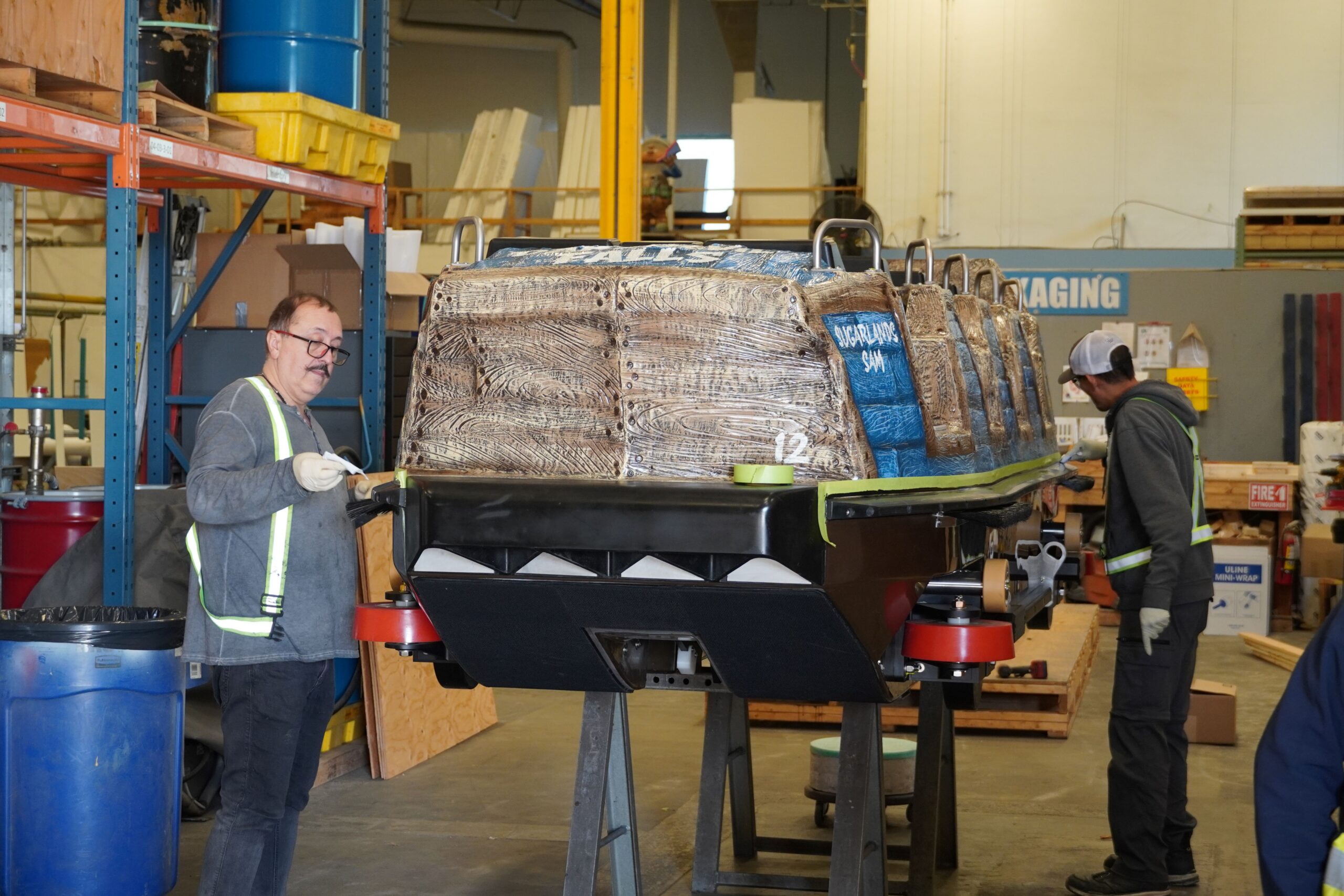
The materials we store on project site need to be protected from extreme heat and UV, wildfires, flooding, windstorms, and other severe weather events. These conditions can damage components before installation, creating additional rework, costs, waste, freight, and project delays.
We are adding clearer guidance to our environmental protection plan on where and how materials should be stored and protected on project sites. These processes help our teams anticipate those risks before damage occurs, and minimize environmental harm when accidents happen.

Our site advisors travel around the world to oversee the construction and installation of our attractions. Many of those projects are in hot and sunny climates, which is ideal for water attractions but can also mean working outside for long periods in extreme heat.
As temperatures rise, we need to make sure our staff can continue to do their jobs in safe working conditions. For example, team members conducting exterior work during very hot days may need additional breaks to rest, cool off, and stay hydrated.
In cases of emergencies where our staff are required to evacuate the premise, such as during wildfires or floods, they can follow our established procedures to access medical services and get to safety.
These measures help protect our people while allowing work to continue safely in changing climates.

Global supply chains, including ours, are exposed to climate risks across the many regions and distances they span. Wildfires, floods, and severe storms can close highways, rail lines, ports, and other key transportation corridors with very little notice. These disruptions are outside of our control and can affect our ability to move components to project sites, even when the event itself happens thousands of kilometers away.
Our Local for Local program helps us shorten our supply chain and mitigate physical risk. Where possible, we source closer to the project site, reducing the distance and complexity of our transportation needs. Prioritizing local vendors where we can give us fewer points of exposure and a more resilient way to get materials where they need to go.
While we do our best to avoid climate-related issues, that doesn’t always mean it never happens. When it does, our logistics team works closely with suppliers and freight partners to find alternative, cost-effective options and get it done without putting drivers and other transportation workers in unsafe conditions.
These are only a few examples of why managing climate risk is an important part of how we deliver services and products to our clients. For us, we are looking at our processes and the way we make decisions across our business to ask a simple question: what do we do when the environment changes?
The more we think about that question today, the better prepared we will be to protect our people and our ability to continue delivering quality products in the years ahead.