30 Years of Engineering at Sea: The Evolution of Cruise Ship Water Parks
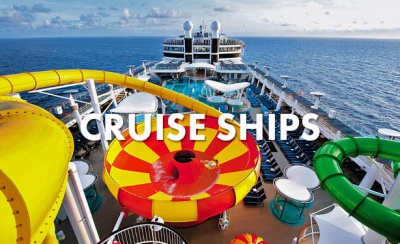
Designing a water park for a cruise ship is an exponentially more challenging feat than building one for dry land. Every decision must account for wind loads, constant vibration, tight deck footprints, multi-level routing, pump placement, and guest flow, while materials must endure saltwater, UV exposure, and years of motion at sea. Not to mention, if there is downtime, there won’t be service until drydock. These constraints have pushed cruise attractions to become some of the most technically demanding and exciting builds in aquatic entertainment.
Over the past three decades, WhiteWater has delivered more than 100 cruise projects, helping transform onboard offerings from simple splash slides into surf simulators, interactive play zones, and top-deck signature attractions that anchor the guest experience. This article looks at how cruise ship water attractions have evolved and what that evolution signals for the next generation of ships.
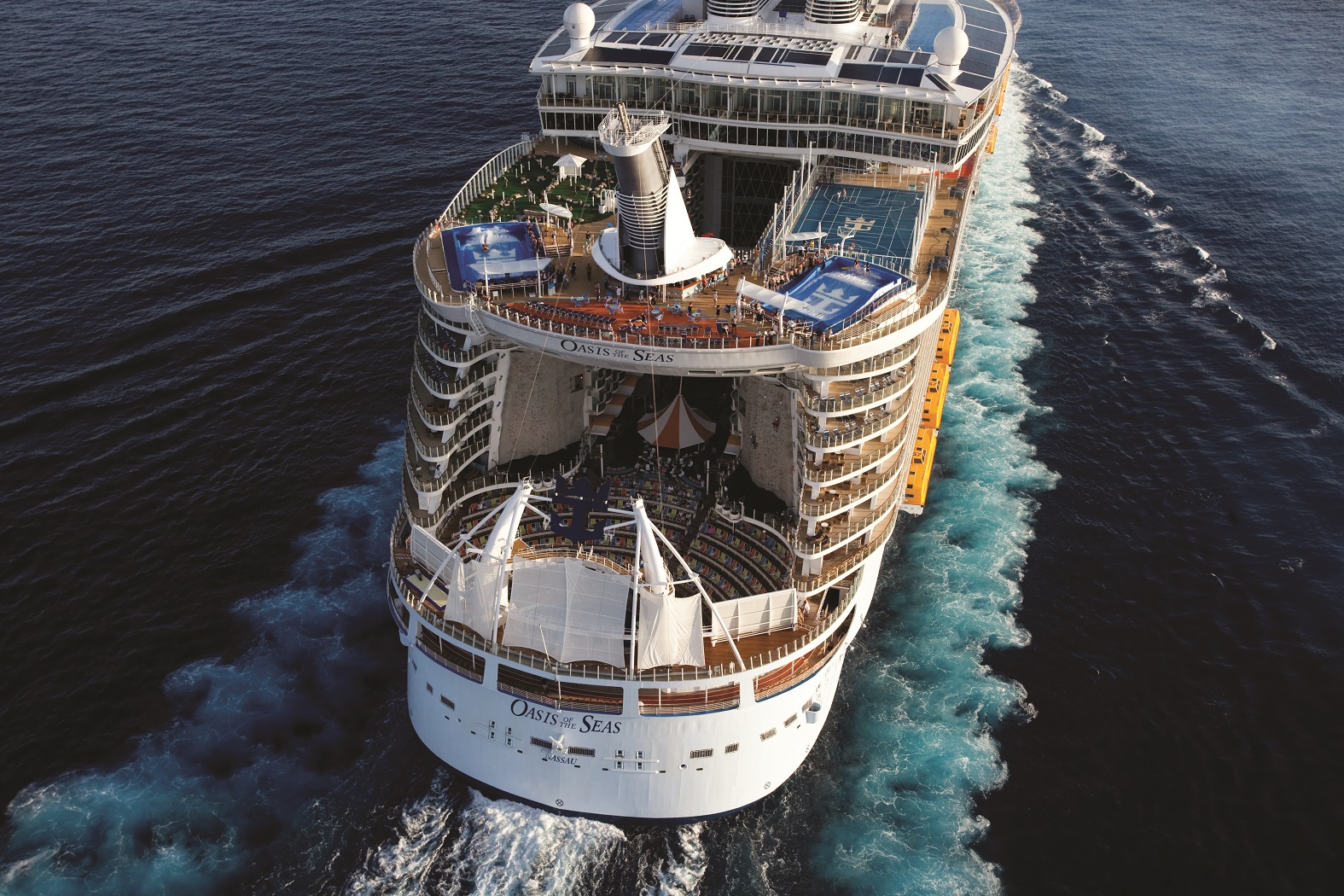
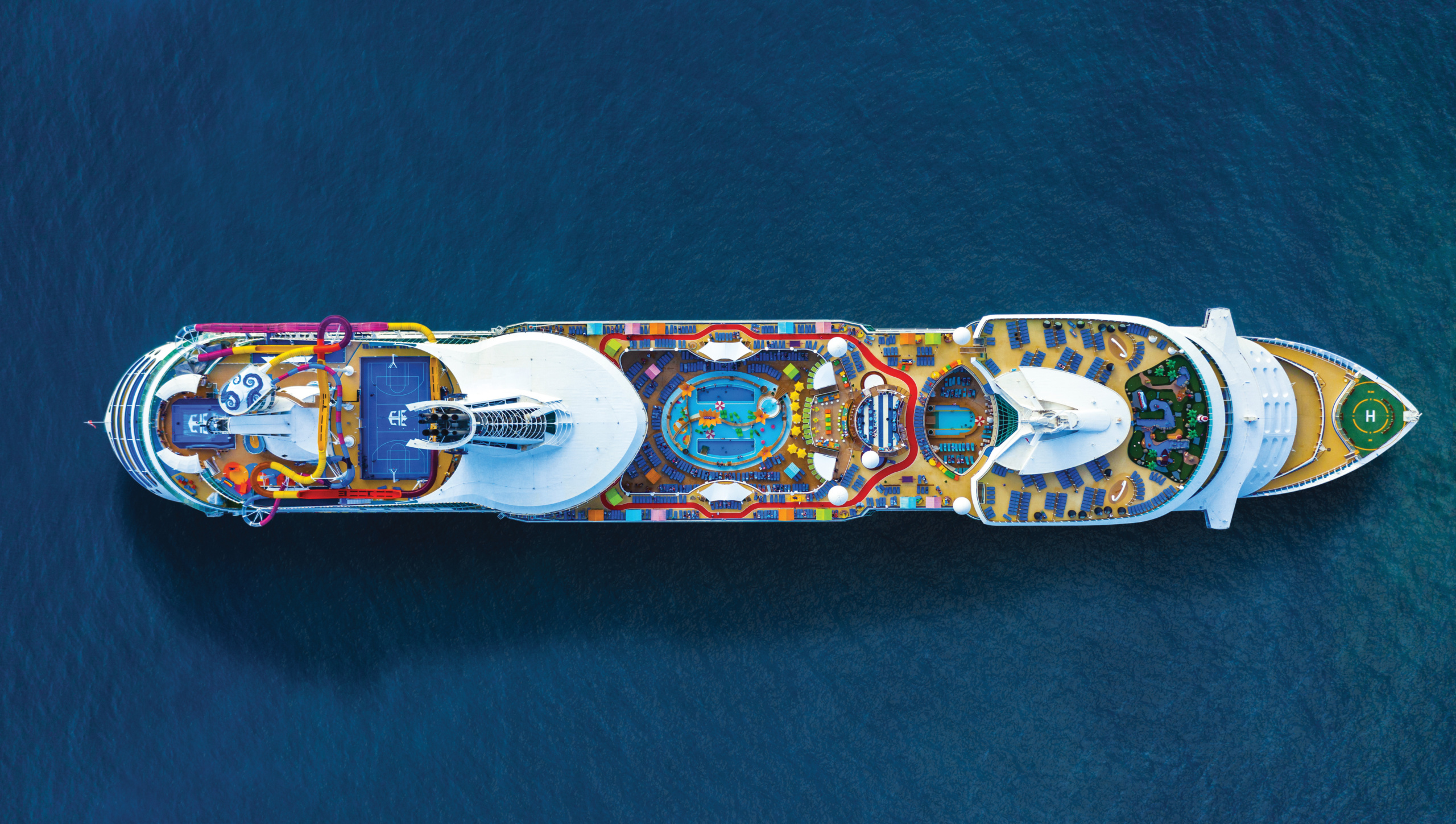
Oasis of the Seas, Royal Caribbean Cruise Line
Bringing Surf to the High Seas
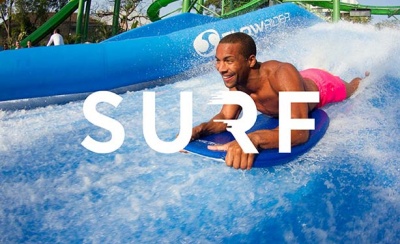
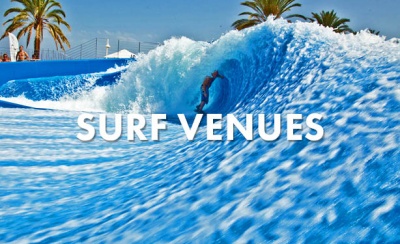
In 2006, Royal Caribbean debuted the first FlowRider® surf simulator at sea aboard Freedom of the Seas, transforming the top deck from a passive lounge area into an active, high-energy social hub. Guests did not just ride once and move on; they watched, learned, tried again, and encouraged others. The attraction created crowd energy, spectator moments, and friendly competition, turning the deck into a live stage throughout the day.
Demand accelerated quickly as operators saw how surf drove repeat ridership and additional revenue opportunities with private coaching sessions. In 2009, Oasis-class ships introduced twin side-by-side FlowRider Double installations, doubling capacity and reinforcing surf as a core identity feature rather than a novelty add-on. Today, more than 20 FlowRider Doubles operate across 16 Royal Caribbean ships, making surf one of the most recognized and photographed top-deck experiences in cruising. The newest installation launched in 2025 aboard Star of the Seas, Royal Caribbean’s second Icon-class vessel, showing that nearly two decades on, surf remains a proven differentiator for guest engagement and brand positioning.
Bringing Guests Closer to the Sea with Acrylic Fiberglass
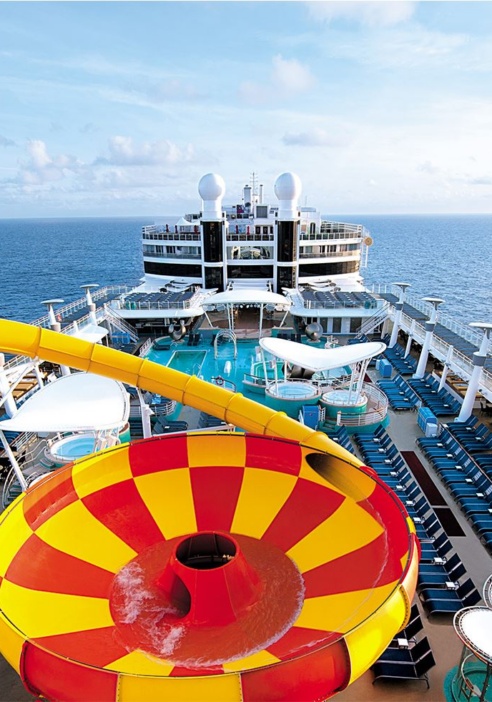
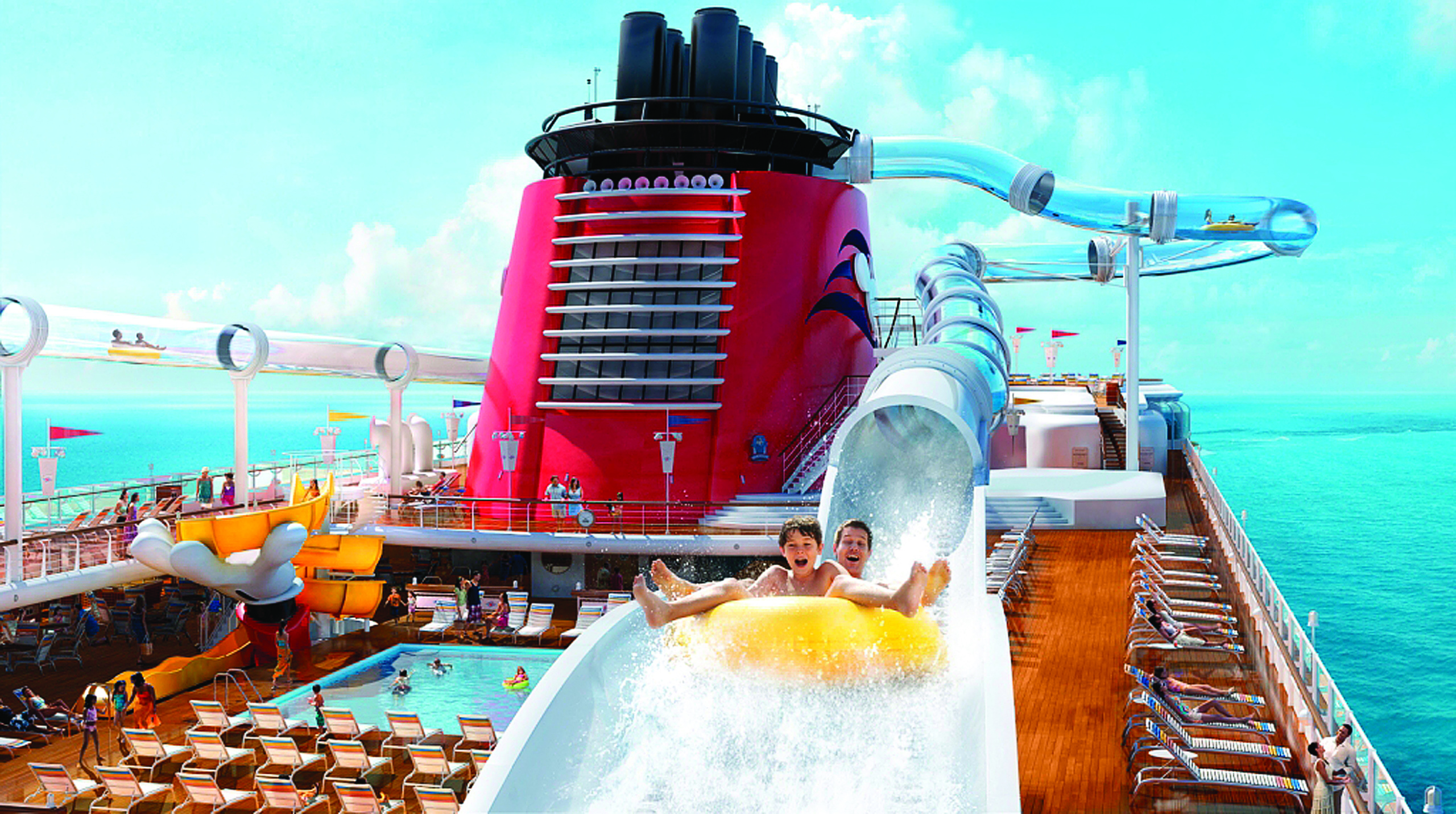
A major turning point for cruise ship water slides came with the introduction of acrylic fiberglass, which made fully transparent slide sections at sea possible for the first time. Until then, cruise slides were almost entirely opaque, driven by material limits and marine engineering constraints. That changed in 2011 with Disney Cruise Line’s AquaDuck. This acrylic water coaster carried one to two-person rafts across four decks and around the ship’s funnel using clear sections that let riders see the ocean below as they traveled. It proved that transparent slide technology could perform safely in a marine environment and set a new benchmark for visual spectacle at sea. The attraction’s success led to a second installation on Disney Fantasy in 2012.
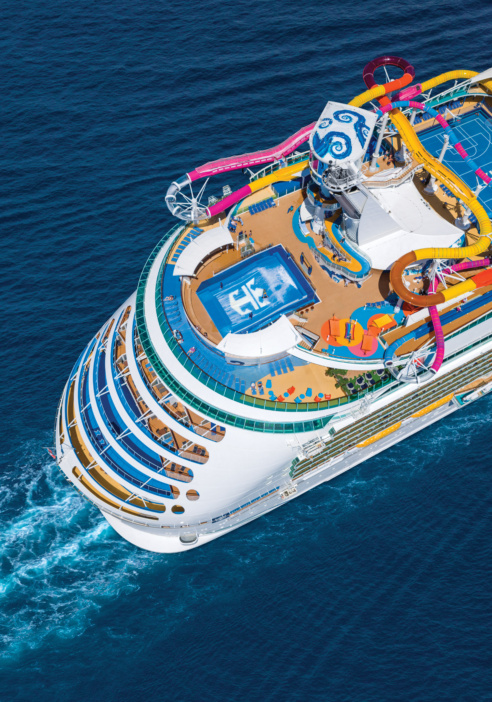
It also opened the door for more ambitious acrylic water slides, including The Blaster℠ on Royal Caribbean’s Navigator of the Seas in 2020, a Master Blaster stretching more than 800 feet and rising seven decks high. The ride combines opaque and transparent fiberglass sections to deliver both performance and visual impact, defying gravity with uphill propulsion, building on the original acrylic installation.
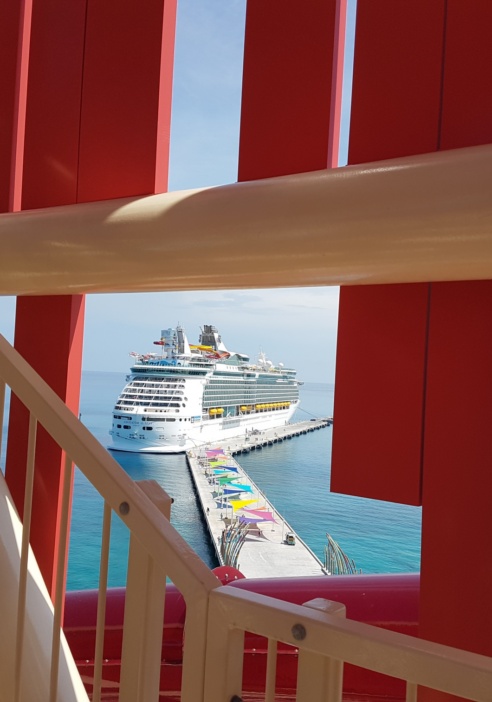
Perfect Day at CocoCay, Royal Caribbean Cruise Line
The Shift From Ship to Island
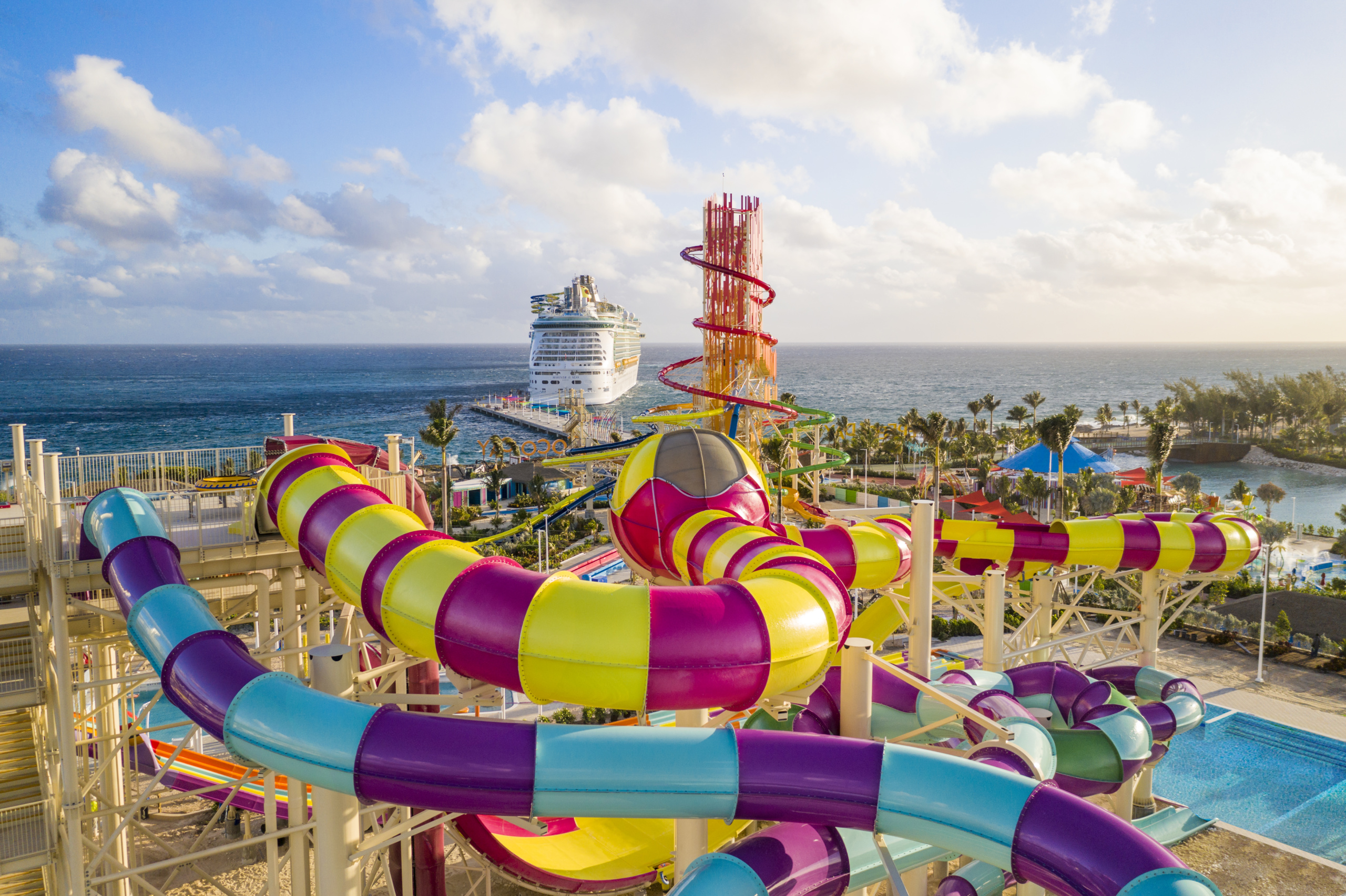
One of the most impactful shifts in cruise entertainment did not happen on deck; it happened offshore. With the rise of private islands, cruise lines are extending their brand beyond cabin walls and into destinations designed around their guest experience strategy. Instead of relying only on ports of call, operators are building proprietary island destinations where attractions, theming, operations, pricing, and guest flow can be planned as one integrated system.
Royal Caribbean’s development of Perfect Day at CocoCay (2019) signaled the start of this new chapter, but other brands are now following with Norwegian Cruise Line’s Great Stirrup Cay and Carnival Cruise Line’s Celebration Key, both opening in 2026. The result is a new hybrid model where the ship serves as the gateway, but the island delivers the marquee thrill, extending revenue opportunities through cabanas, activities, F&B, and premium upcharge experiences.
Diversifying the Ride Mix
As cruise guest profiles continue to broaden, onboard attractions are playing a larger role in serving different age groups, travel styles, and brand expectations. Rather than adding rides as standalone features, cruise lines are using them as planning tools to shape how each ship feels and functions. WhiteWater’s product range supports this approach by giving operators flexible building blocks that can be matched to deck constraints and target audiences.
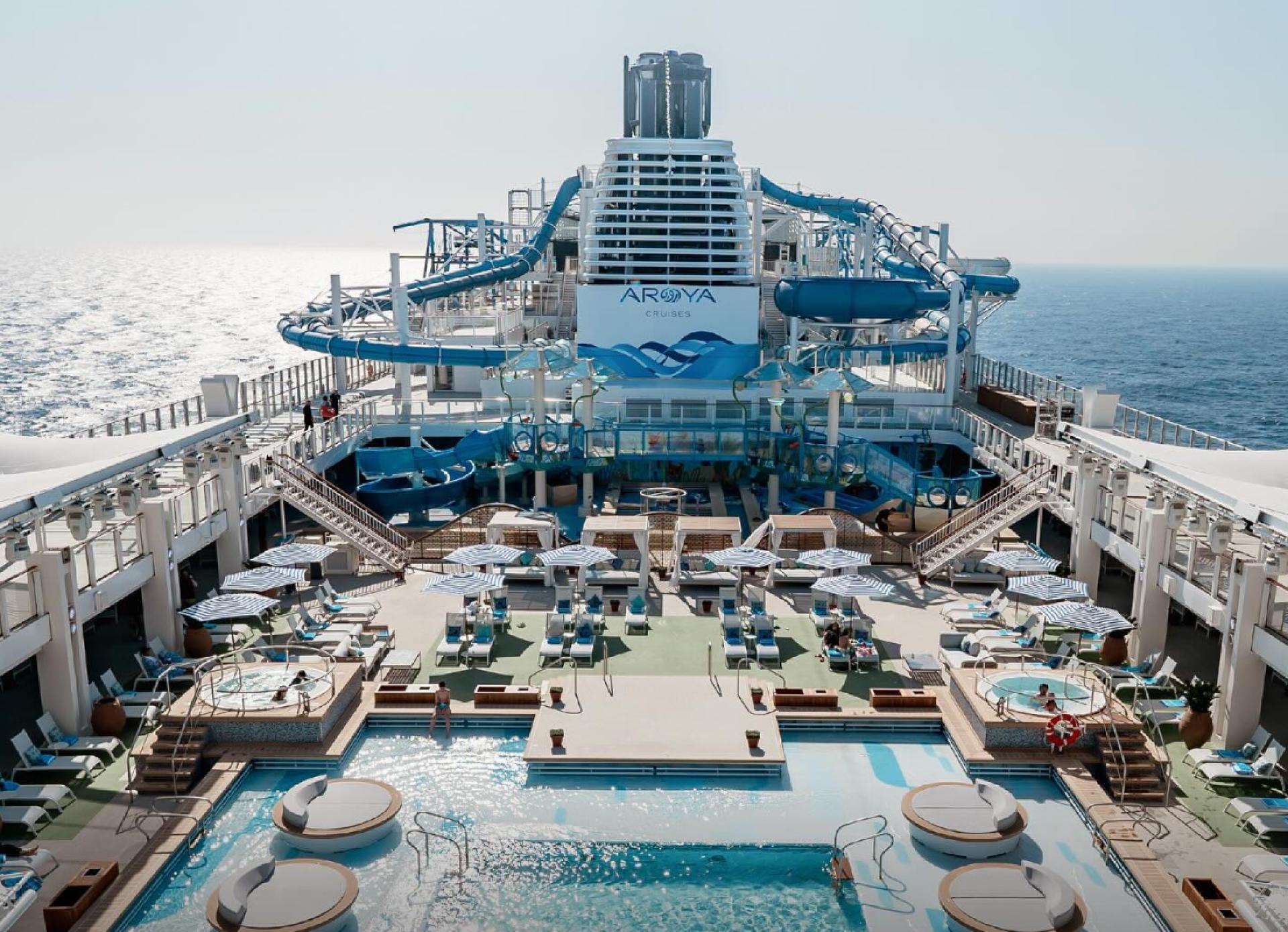
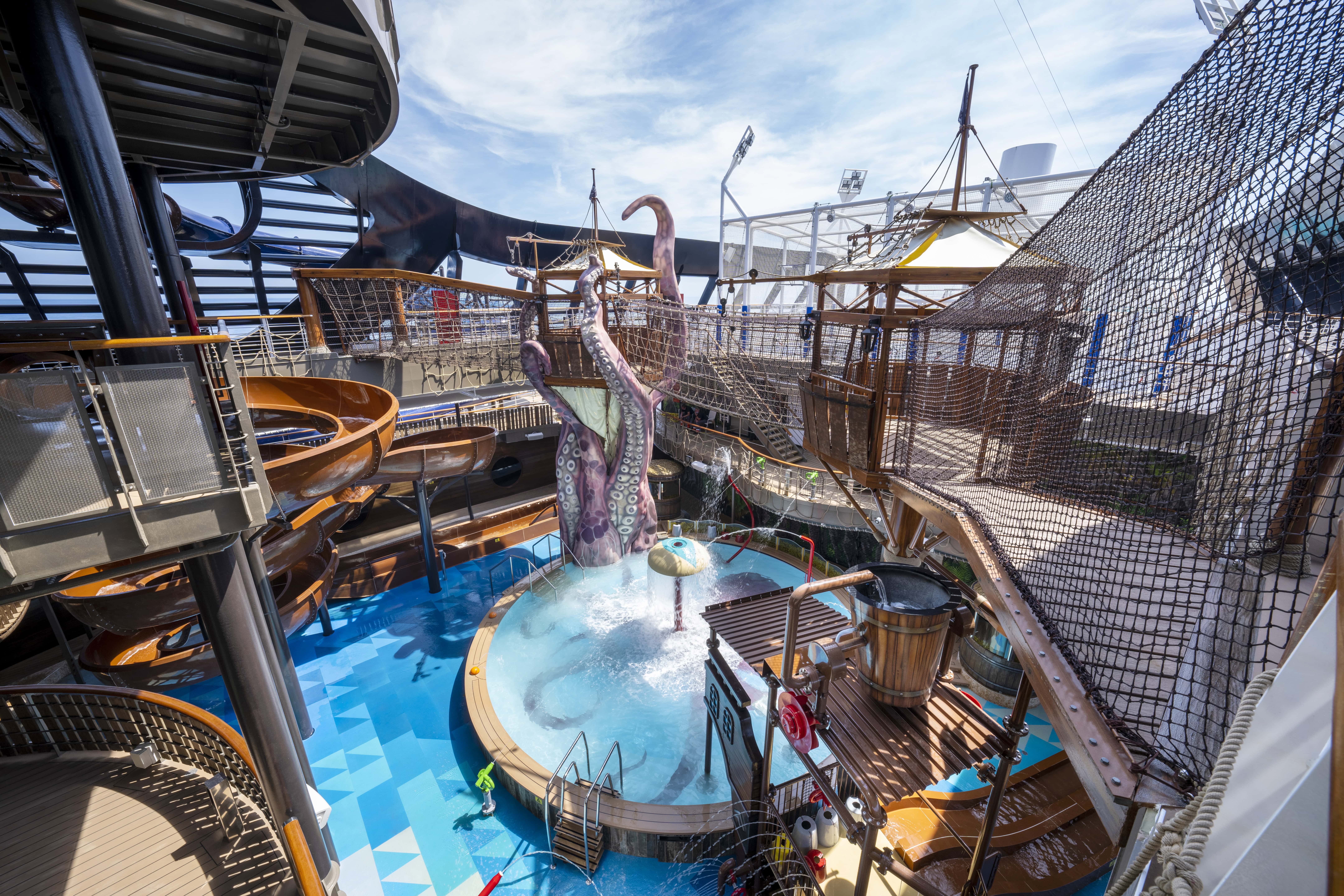
On Aroya Cruises, AquaForms modular aquatic play structures are configured to fit unconventional layouts while still supporting strong capacity and smooth guest flow. On MSC Seaside and SeaScape, ropes courses with Kraken-inspired theming add skyline presence and multi-deck visual storytelling. Multi-slide towers and family raft rides are also moving ships closer to compact water park environments, strengthening the shared, cross-generational experience onboard. Cruise attractions are no longer simple add-ons. They are part of an integrated guest journey strategy that supports brand positioning and repeat visitation.
Making the Deck A Destination
The days of water slides as amenities are long gone. Today, they are strategic assets helping to support the battle for the family segment and helping to drive repeat sailings. The top deck has become a showcase for differentiation, marketing imagery, and cross-generational experiences that keep guests coming back. As family cruising grows and engineering horizons expand, one thing is clear: the next generation of cruise entertainment won’t be borrowed from land; it will be invented for the sea.
Learn more about our cruise line portfolio at www.whitewaterwest.com/en/venue-types/cruise-ships.